

Discover the distinctive decor and inviting dining atmosphere at Symposium Cafe Restaurants. Known for Renaissance-inspired interiors, beautiful design details, and stylish casual dining spaces, Symposium offers a unique restaurant experience that helps guests relax, connect, and enjoy breakfast, brunch, lunch, dinner, desserts, and drinks in a setting that truly feels special.
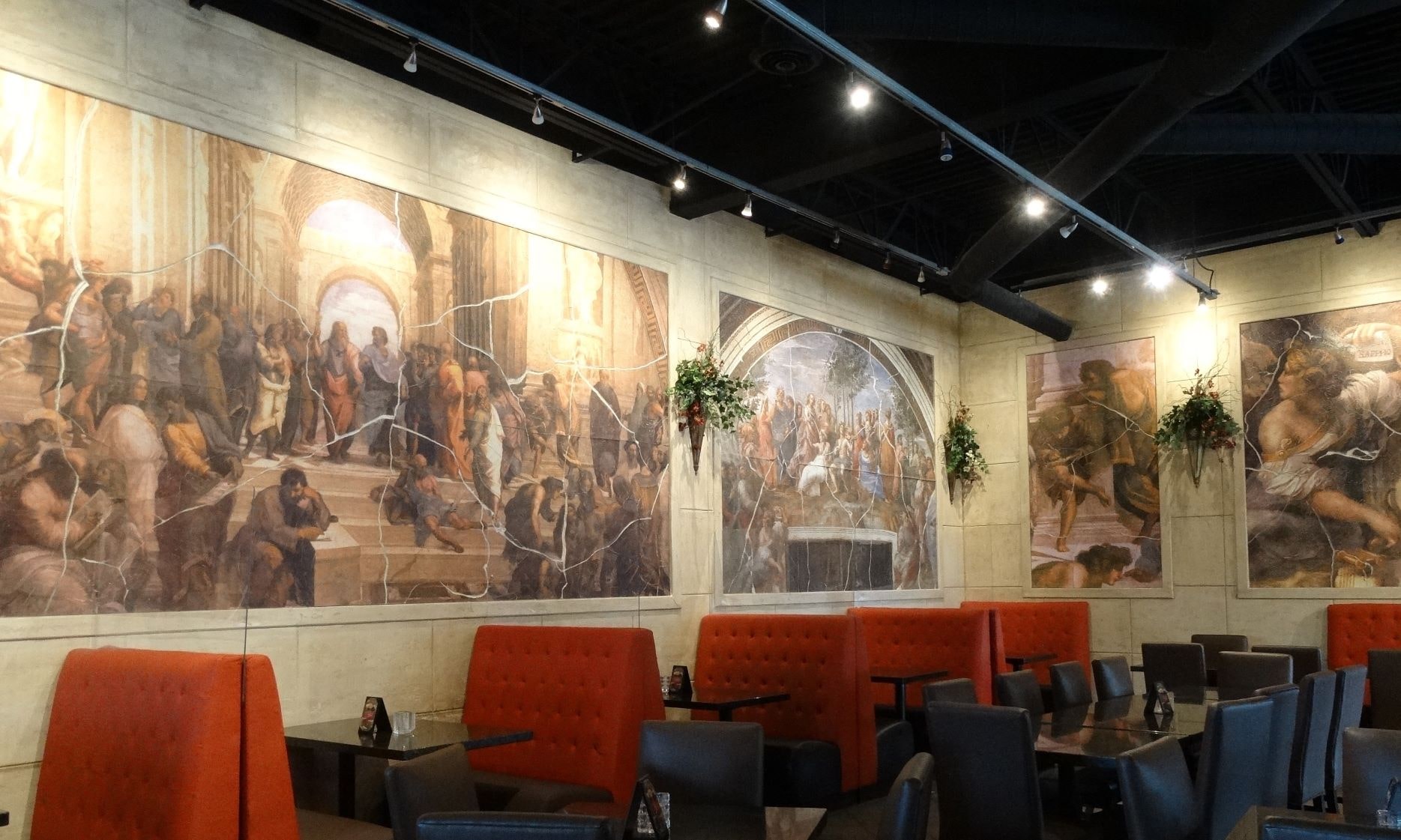
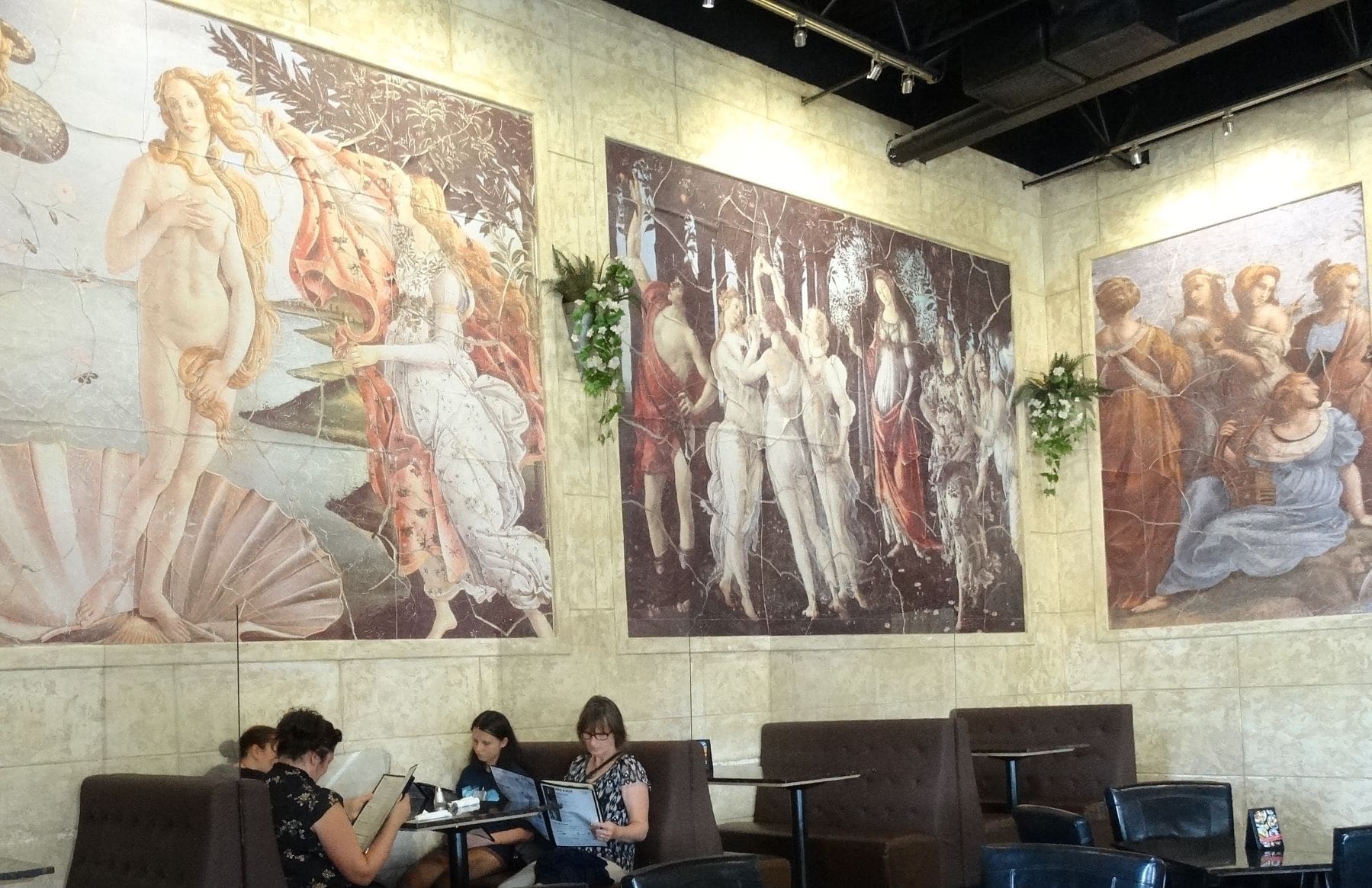
“Wow” “Stunning” “Amazing” These are words often heard when customers walk into Symposium restaurants for the first time and see our Renaissance inspired restaurant interiors. Why choose this theme? The Renaissance was a time of enlightenment, so what better way to invite our guests to take time for a relaxing meal and authentic conversation than to surround them with inspiration? Our restaurant interiors are one-of-a-kind and just one more way that Symposium Cafe Restaurant & Lounge invites you to “Escape the Ordinary” ™
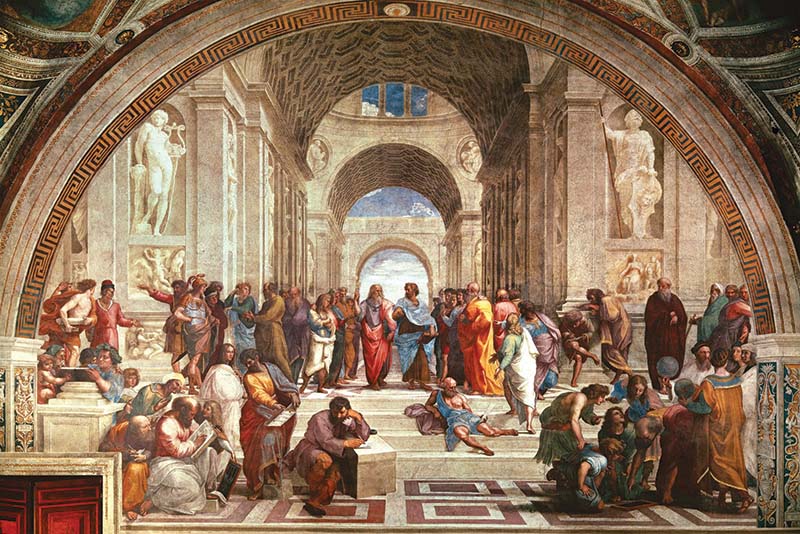
School of Athens Raphael, 1510-1511, Fresco, 8m x 5.5m
Raphael’s famous “School of Athens” fresco is the trademark visual centrepiece in each Symposium restaurant. Here philosophers Aristotle and Plato debate their viewpoints, while around them the great minds of history engage in conversation, teaching, and games.
We like to think of Symposium Restaurants as the modern-day version of this gathering of minds: a business meeting at a quiet booth, a large family-style celebration at a social table, a romantic meal under the patio lights and a solo diner enjoying downtime. Business or Social. Formal or Casual Dining. We’re the place for everyone - with a menu for every mood.
Every Symposium restaurant offers guests these beautiful dining surroundings; with each restaurant location customized in size, seating, and design for a unique atmosphere. We’re extremely proud of the quality workmanship of our stone art walls and the pleasure our restaurant guests receive when enjoying our menu in the surroundings of beautiful modern frescos. And it’s not just restaurant guests who appreciate the restaurant decor, we even have art professors regularly sending students to examine our Symposium dining interiors as part of their curriculum!
The Best Discussions are at the Dining Table – Enjoy Delicious Food, Refreshing Drinks & Great Conversation
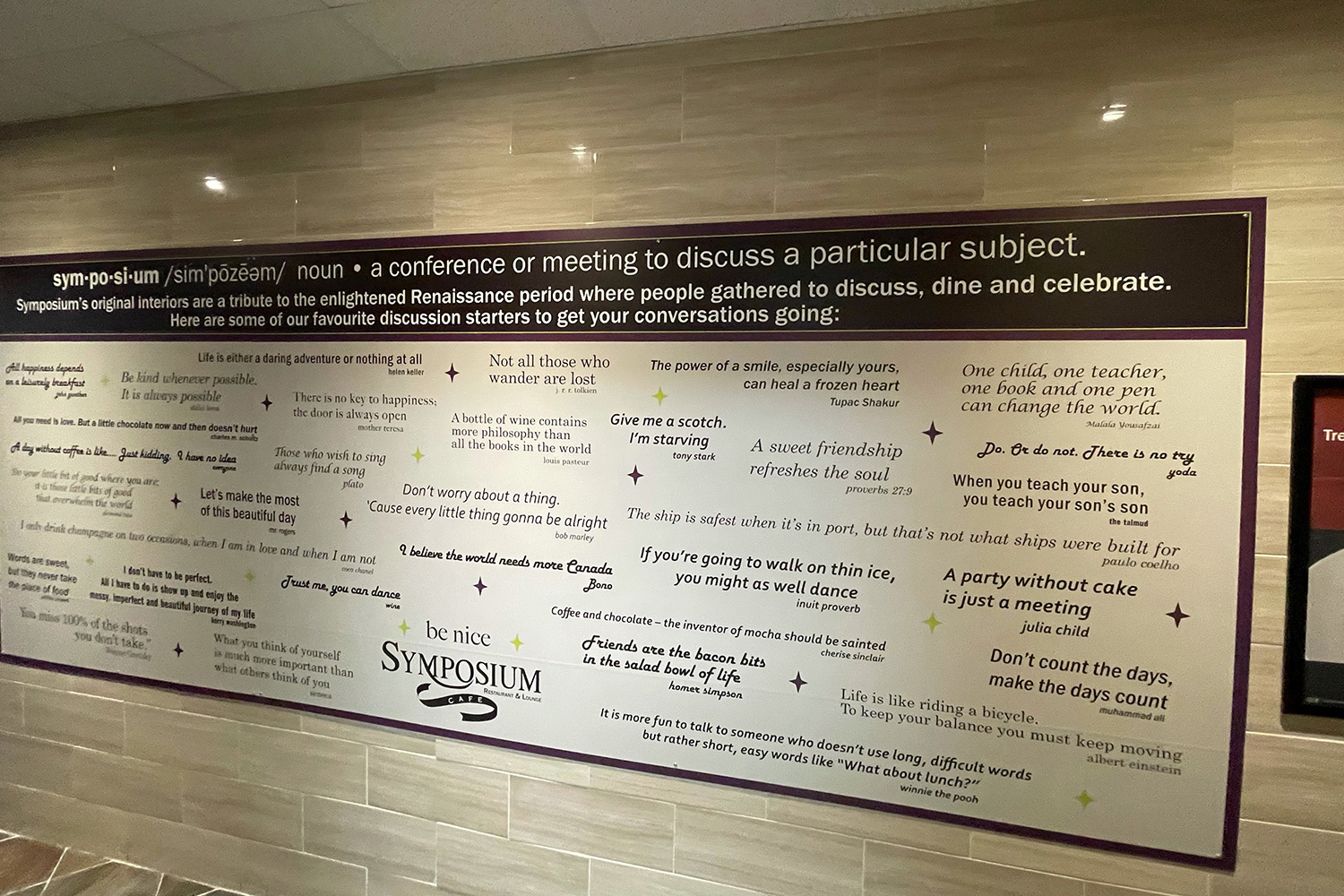
In addition to classical artistic inspiration from the Renaissance, you’ll also find our engaging Wall of Quotes in every Symposium restaurant. It’s a varied collection of thought provoking quotes posted on our restaurants’ walls for diners to discuss and debate: some serious, some humourous, but all chosen to be a spark for stimulating conversation between our dining guests while enjoying a delicious meal or refreshing cocktails.